Ace Mobile Tyres Ltd • 17 November 2026
Flat tyre on the M4 or M5: what to do while you wait?

Can you drive on a flat tyre? What to do on the motorway & risks of driving with a puncture?
Ever wondered if you can keep driving with a flat tyre? It might seem like a quick fix to a sudden problem, but the risks can be far greater than you'd think. Before you stay behind the wheel, here’s what you need to know about motorway safety and tyre punctures.
Can you drive on a flat tyre?
Never keep driving on a flat tyre. It’s unsafe, can seriously damage your vehicle, and puts you and others at risk. As soon as you notice a flat, slow down and pull over in a safe location.
Driving even a short distance on a flat tyre can ruin the rim, damage the suspension or brake lines, and lead to more costly repairs. More importantly, it greatly decreases your control over the vehicle, especially at higher speeds or in poor weather conditions.
It's never worth the risk of continuing to drive, even if you're close to your destination. Prioritising safety helps prevent further damage and keeps you in control.
What should you do if your vehicle has a puncture on a motorway?
If you get a puncture on the motorway, your safety and your passengers' safety must come first. Once you’ve come to a stop in a safe location, follow these steps to stay protected while you wait for help:
- Exit the car from the passenger side and move behind the safety barrier.
- Call for professional assistance using your mobile phone or the nearest emergency telephone.
- Do not try to change the tyre yourself due to the danger of high-speed traffic.
- Ensure all passengers stay out of the vehicle and behind the safety barrier.
- Wear high-visibility clothing if available, especially in poor visibility or darkness.
- Keep your vehicle's sidelights on.
- If it’s safe, place a warning triangle at least 45 metres behind your vehicle.
- Stay alert and supervise children closely.
- If you feel unsafe at any point, call emergency services.
- Always put your safety first and steer clear of any avoidable dangers.
How far can you drive on a flat tyre?
Avoid driving on a flat tyre whenever possible, as it can seriously damage your vehicle and threaten your safety. A completely flat tyre offers no support or control, and even a short drive can cause costly damage. If you absolutely must move the vehicle, only do so to reach a safer location – such as the hard shoulder – and drive at an extremely low speed, ideally under 15 mph.
Driving on a flat can damage the tyre’s sidewall, bend or crack the wheel rim, and even harm the suspension or the car's braking system. If you keep driving, the tyre may disintegrate completely, increasing the risk of losing control of your vehicle. Instead, stop as soon as it's safe and call for assistance. If you're in a safe area and know how, you can fit a temporary spare tyre.
To reduce the chances of a flat in the first place, regularly check your car tyres for proper inflation, tread depth, and signs of wear. Prevention is always better than dealing with a roadside emergency.
How long can I drive with a bulge in my tyre?
If you notice a bulge in your tyre, you should stop driving as soon as it is safe to do so. A bulge signals internal damage, often caused by hitting a pothole or kerb, and can lead to sudden failure or a blowout at any time.
Unlike a slow puncture, a bulge indicates a structural weakness in the tyre sidewall that cannot be repaired. Continuing to drive, even for a short distance, increases the chance of a serious accident – especially at higher speeds.
Even if the car feels stable, replace a bulging tyre immediately. Don't rely on run-flat tyres in this situation, as the problem is not air pressure but internal damage.
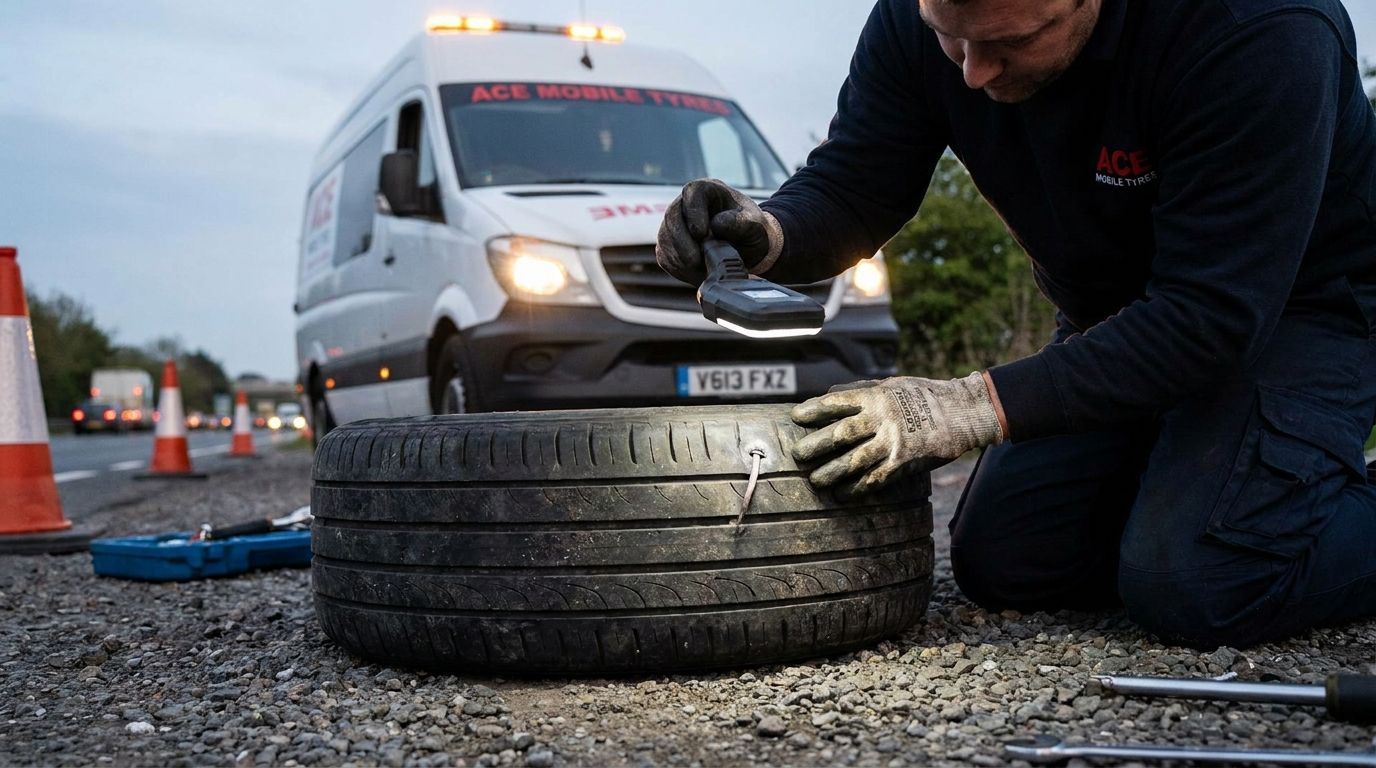
Can you drive with a nail in your tyre?
Yes, you can drive with a nail in your tyre, but only for a very short time – and only if the tyre isn’t losing air rapidly. If the tyre is visibly deflating or flat, you should stop right away and avoid driving any further.
The puncture's severity and the nail's location determine how quickly air escapes. In some cases, the nail may temporarily seal the hole, allowing you to drive a short distance to a nearby garage or safe place. However, if you keep driving, the nail may shift, causing a sudden blowout or further internal damage to the tyre.
Even if the tyre appears stable, have it inspected and repaired or replaced as soon as possible. Never ignore a puncture, even a slow one—it can become dangerous without warning. Taking action right away can help you avoid costly repairs and ensure your safety on the road.
Is it safe to drive with a slow puncture?
It is not recommended to drive with a slow puncture, even if the tyre appears to be holding air. A gradual leak can worsen without warning, leading to a rapid loss of pressure and increasing the possibility of a blowout while driving.
Slow punctures can be deceptive, as the tyre may seem fine at first but become unsafe over time. Loss of pressure affects handling, braking, and fuel efficiency, making your vehicle less stable and more difficult to control – especially at higher speeds or in poor weather conditions.
If you suspect a slow puncture, check your tyre pressure and inspect the tyre for visible damage. If the pressure continues to drop, repair or fit a new tyre to the vehicle as soon as possible. Driving short distances at low speeds to reach a garage may be acceptable, but avoid extended use, as it is unsafe.
Driving with a punctured run-flat tyre
You can drive on a punctured run-flat tyre, but only for a limited distance and at reduced speed. These tyres are designed to support your vehicle's weight temporarily after a loss of pressure, allowing you to reach a garage or safe location without an immediate roadside change.
Even though run flats offer short-term convenience, they are not a long-term solution. After any puncture, a professional should inspect the tyre to determine whether it can be repaired or needs replacing. Always follow your vehicle manufacturer’s guidelines, and remember that keeping an eye on the condition of your car tyres is still essential – even with run-flat technology.
Can driving on a flat tyre damage your car?
Yes, driving on a flat tyre can seriously damage your car. Without proper air pressure, the tyre cannot support the vehicle's weight, placing excessive stress on the wheel rim and surrounding components.
Continuing to drive in this condition can lead to bent or cracked rims, damaged suspension parts, ruined brake lines, and further deterioration of the tyre itself. It also compromises your ability to steer and brake effectively, increasing the risk of losing control and causing an accident.
Even short distances can lead to costly repairs if you ignore a flat tyre. The tyre's internal structure may become irreparably damaged, making it unsafe even if reinflated.
At the first sign of a flat, pull over safely and get assistance to prevent more serious damage to your car.